OMERTA
A 2D narrative card-strategy game about running a crime family in 1920s Prohibition-era New York.
OVERVIEW
High Concept
Build a criminal organization through cards, limited time, and difficult relationships. Every job or event asks the player to commit the right people and items while accepting the consequences.
GAMEPLAY OVERVIEW
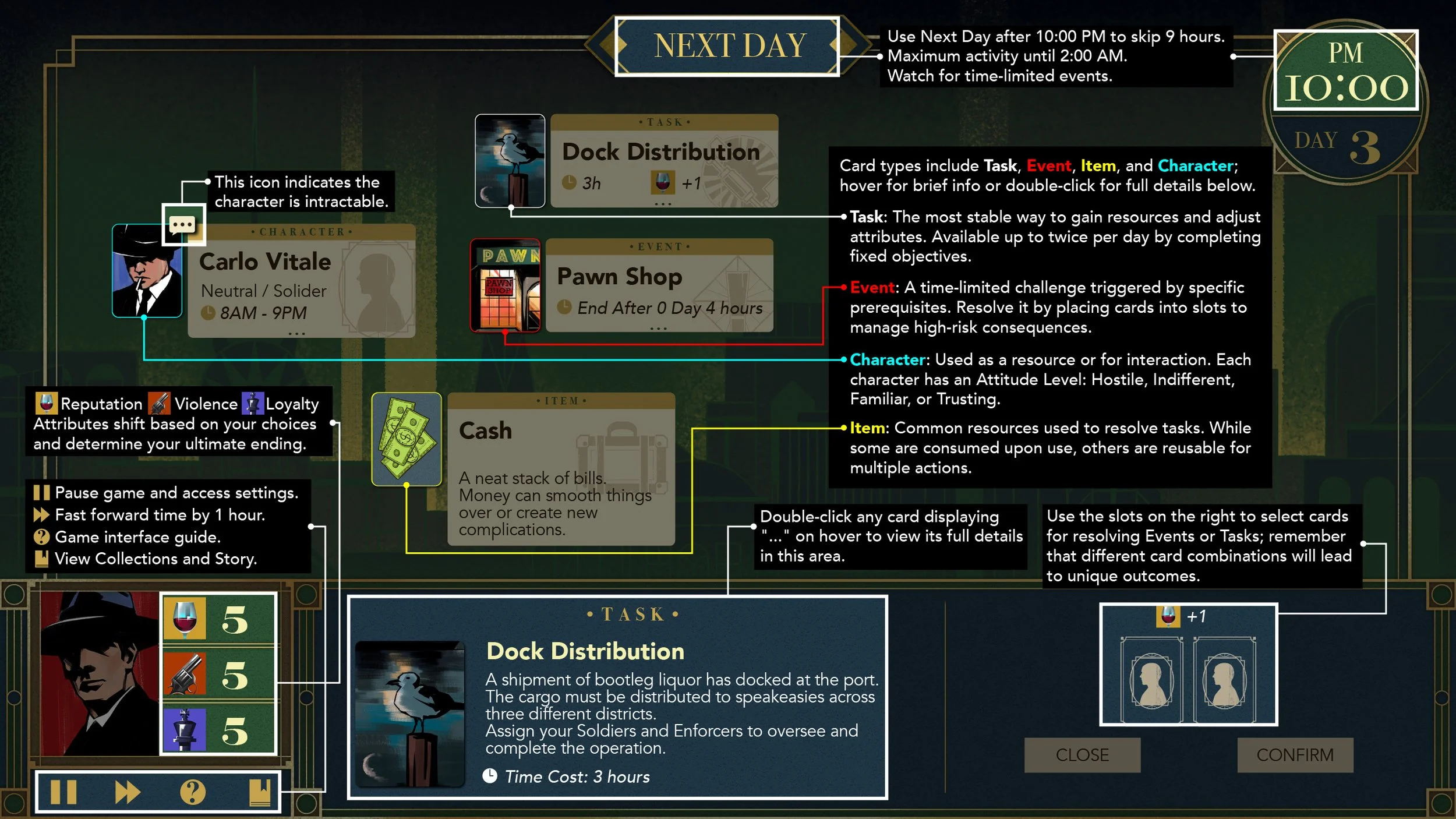
OMERTA uses four card types—Task, Event, Character, and Item—within a time-based decision system. Players assign characters and items to resolve activities while managing limited time, attributes, and potential consequences.
SYSTEM DESIGN
Multiple Resolution Paths
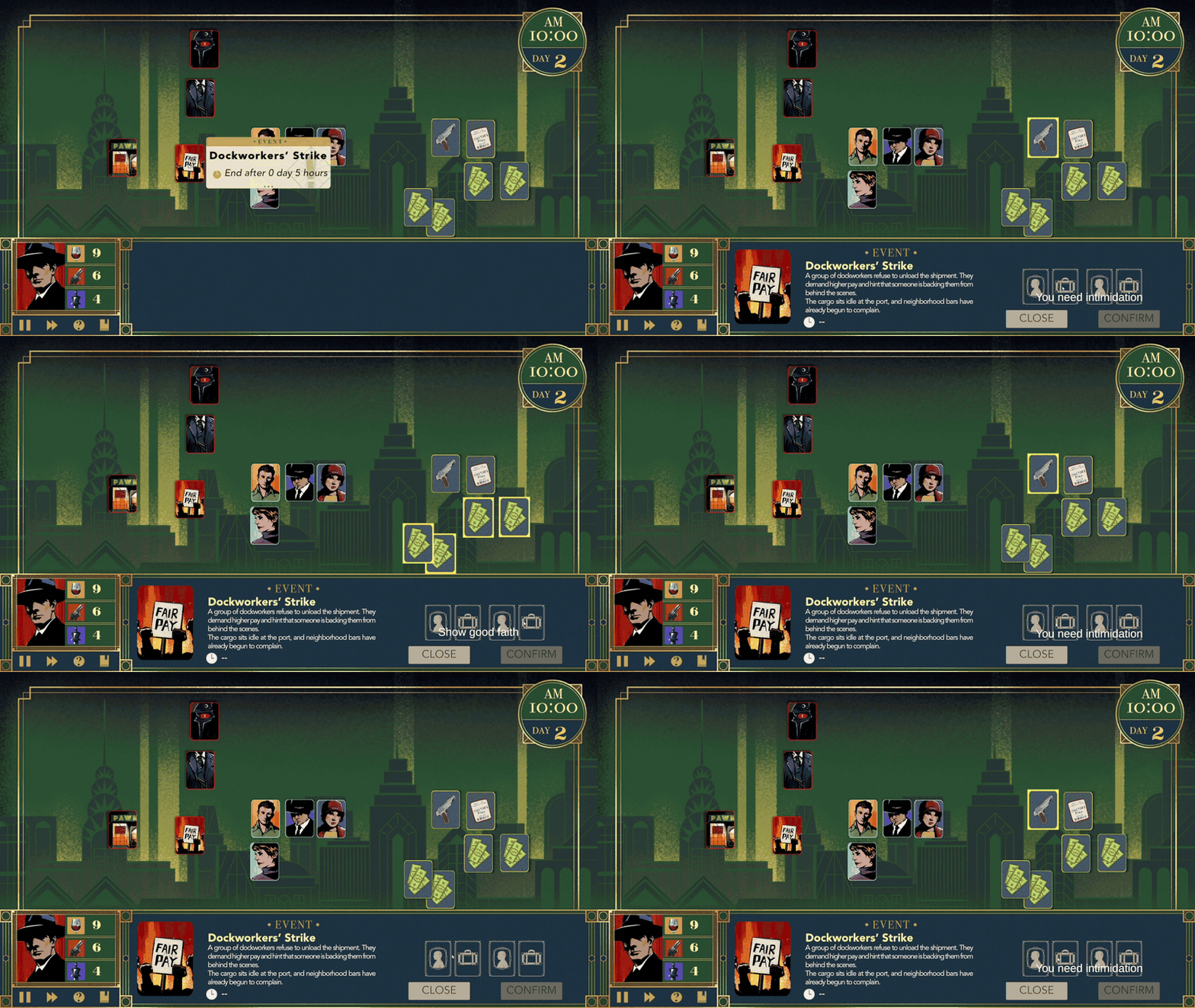
The same Event can be resolved in different ways depending on the Characters and Items the player chooses to commit. Each approach carries different requirements, costs, and consequences, turning card assignment into a strategic choice rather than a single correct solution.
Time & Decision Economy
Tasks and Events exist within limited time windows, while player actions consume time. Choosing an action that extends beyond an Event's remaining window can cause that opportunity to expire, forcing players to weigh immediate rewards against what they may lose while time advances.
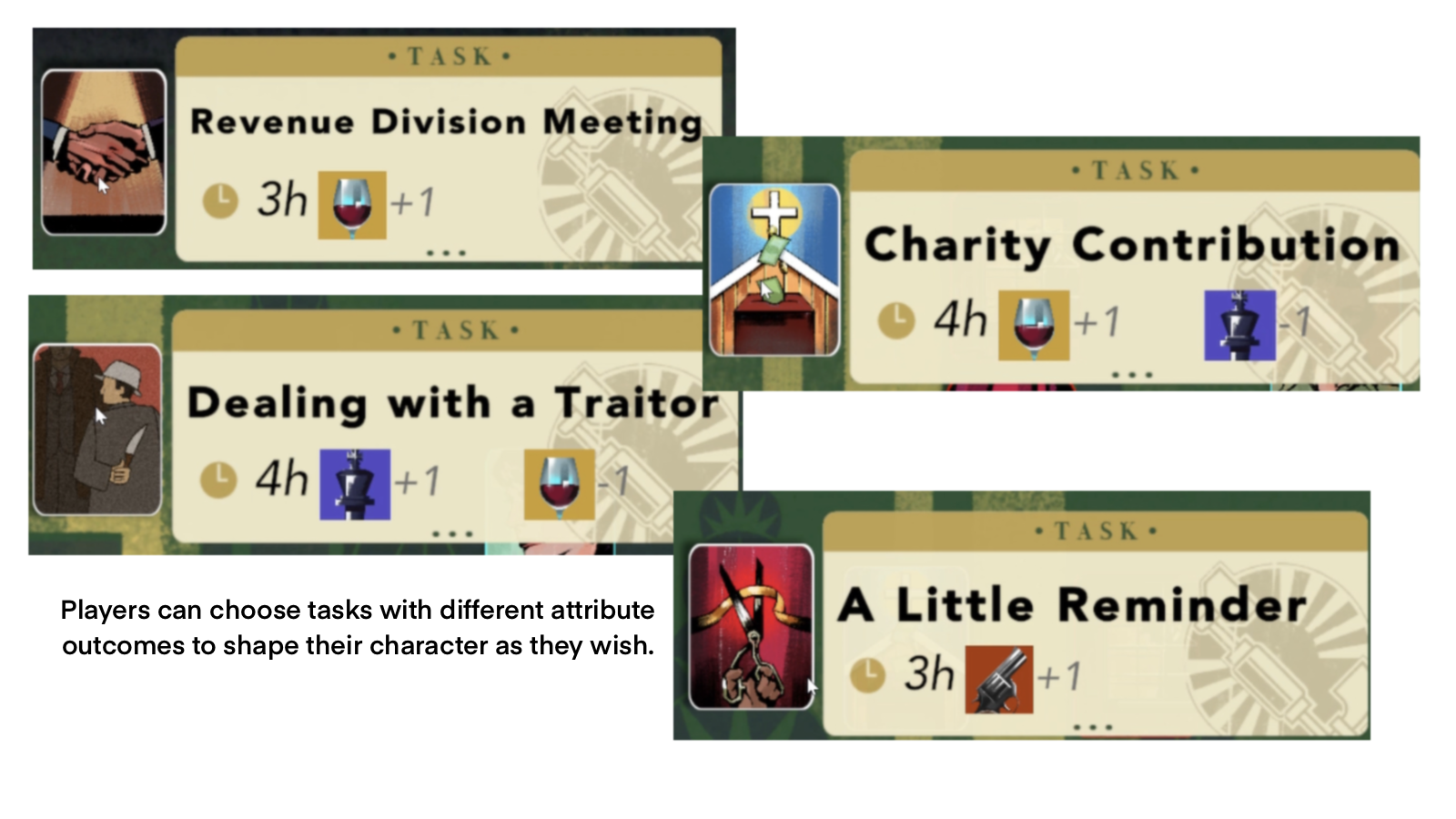
Attribute Risk System
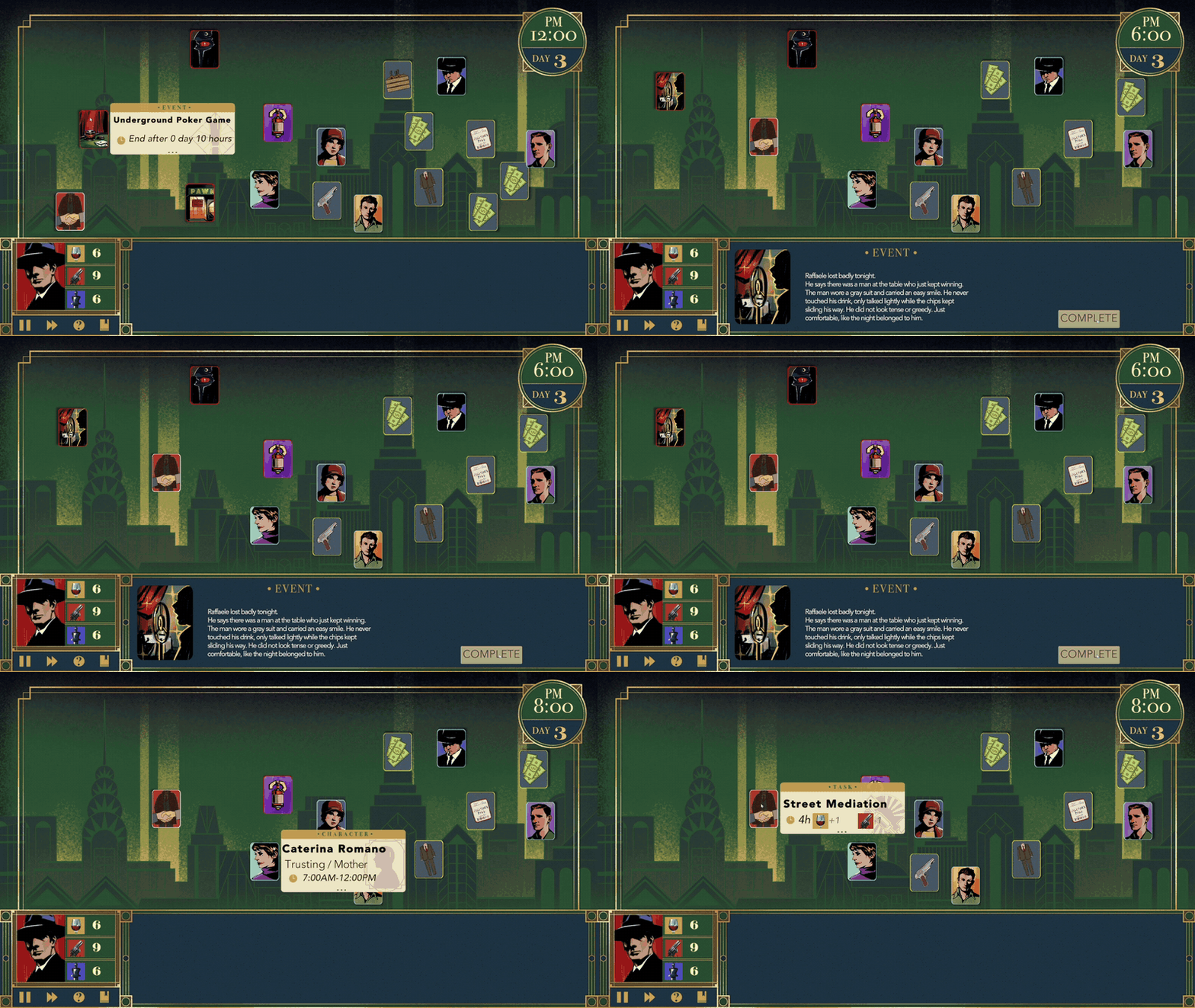
Reputation, Violence, and Loyalty act as conditions for Events rather than simple progression bars. Different attribute values can unlock or block opportunities and change which situations the player encounters, making character development part of the game's risk-management system.
DESIGN ITERATION
The original interface displayed Event information alongside the moving cards. During playtesting, this caused the information panel and cards to visually compete with each other and made the screen difficult to read. The final design moves detailed card information into a fixed panel at the bottom of the screen, creating a more stable information hierarchy. Playtesting also showed that players could forget previously encountered Events, so a Collection was added in the lower-left corner to let players review unlocked cards and their story information.

Event information followed the cards, causing UI elements and cards to compete for visual space.
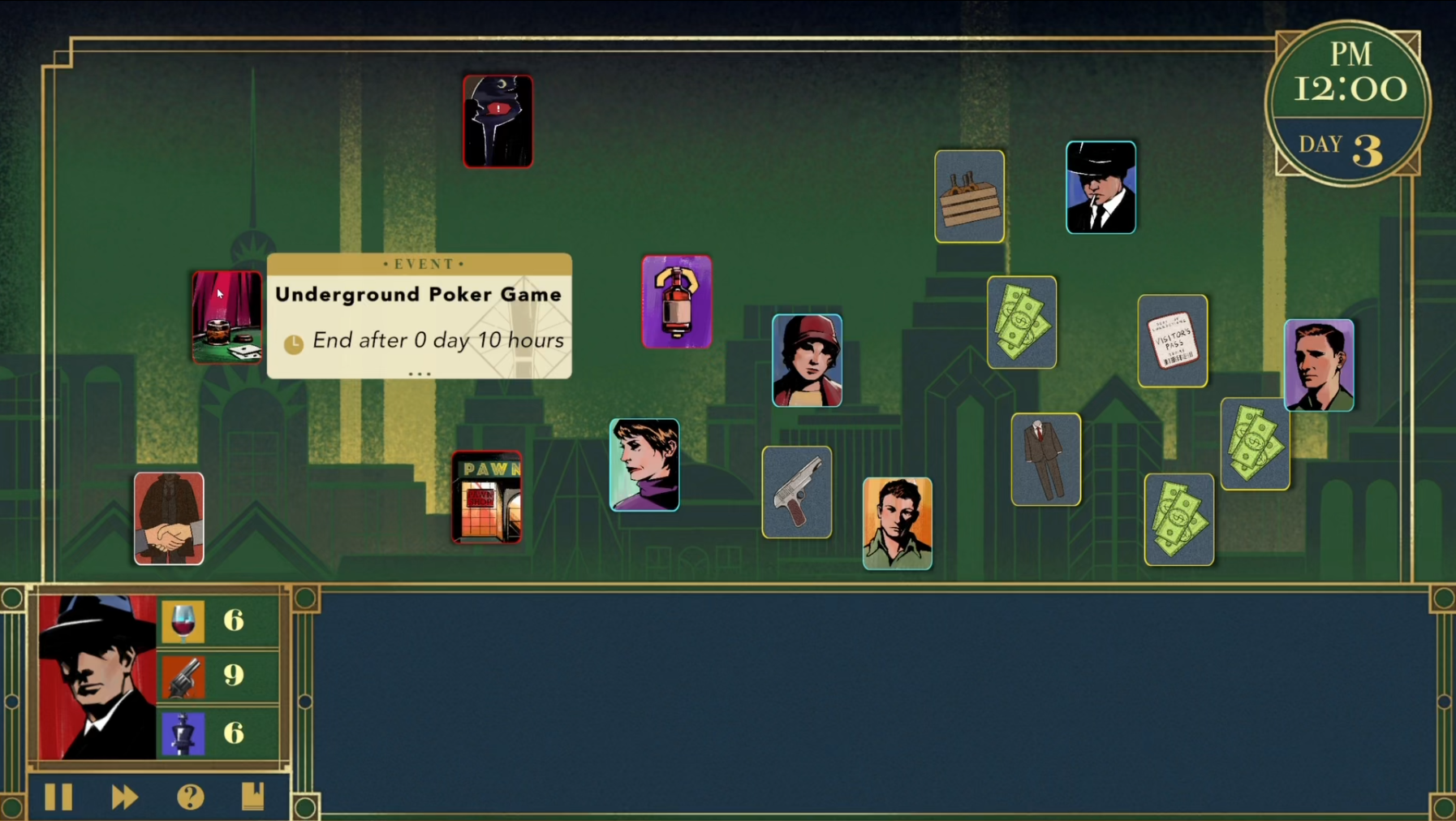
Card details were moved into a fixed bottom panel, while a Collection was added for reviewing unlocked cards and story information.
PLAY OMERTA
The current playable demo ends on Day 5.